 More and more individuals are opting to work from home. According to the latest U.S. Census, nearly 4.2 million people worked from home in 2000; this up from 3.4 million in 1990. The Census estimates are for people who work most days of the week from home. Additionally, there are about 16 million more individuals who also work from home one to two days a week.
Many of these work-at-home individuals are entrepreneurs: The U.S. Department of Labor's Bureau of Labor Statistics reports that in 2004 more than 4.5 million people worked at home with a home-based business, these individuals comprising about 30 percent of the work-at-home population.
The advantages of a home-based business are many and include:
- Zero commuting time and expenses - Lower start-up costs and overhead - Tax benefits - Optimum flexibility and time management - Part or full-time work options - The satisfaction of being your own boss - Greater income potential The reality though of working from home presents a number of new challenges unique to the home-based business owner. Knowing about these potential pratfalls ahead of time can be a key factor in preventing them from becoming a roadblock to your home-based business success.
1. Not keeping business and personal life separateToo many people have learned the hard way that if you commingle business and personal responsibilities at the same time, you won't make any real progress in either.
Family members need to know that your being home does not equate to being at their beck and call 24/7. Frequent interruptions can wreak havoc with performing business tasks efficiently. And when the chores of the household start beckoning, you'll need to be able to resist their call.
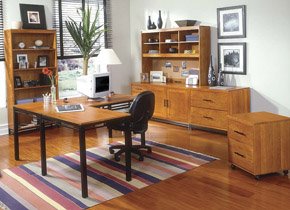
If possible, have an entire room of your home set up exclusively for your home business, optimally with an outside separate entrance if business clients or visitors will be coming to call. If not possible, and your home office is part of a larger room, be sure to partition it off with something like a screen or an area rug. Have a dedicated phone line for business use only, and make sure your home-business space has a door to close off any household noise. You may also need to come up with a "signal" so that family members know you literally "mean business." Closing your office door or affixing a sign reading "Hard at work -- Do not Disturb" may be all that's necessary.
And the flexibility afforded by having a home-based business doesn't mean there should be no schedule at all. Yes, it's great that you can adjust your work hours to attend Timmy's kindergarten graduation, but do plan out blocks of time every week devoted exclusively to the business and try to stick to it; i.e. every weekday 9 a.m. to 1 p.m., and 6 to 10 p.m. (i.e., when your spouse can take over care of the kids or household duties).
Remember, treat your home-based business as a "real" professional business and others will follow suit.
2. Not doing something you really like"You have to love what you're doing, because then it won't seem like work to you, and you'll bring the necessary energy to profit from it." Billionaire Entrepreneur Donald Trump
In addition to being good at what you do and fulfilling a real need in the marketplace, you need to have a real passion for what you'll be doing in order to be a success at it. If you don't love what you do, how will you "sell" it to someone else? Enthusiasm is contagious and so is the lack thereof.
Of course passion alone does not a successful business make. Other factors such as sufficient start-up funds, proper planning and management, and understanding cash flow all contribute to the success of your business. But, the ultimate factor in starting your own business should be that it will allow you to earn your living by doing something you truly like or love to do.
If not -- those sometimes-necessary long hours, those ups and downs, and those long trade journals -- may eventually be just too much to bear.
3. Not considering the legalities or protection of your home-based businessOne tax consultant spent thousands of dollars renovating his home for his home-based business. He should have known that in areas zoned as "residential only," restrictions may rule out home businesses that involve the coming and going of customers, clients or employees. Soon after his neighbors became aware of his steady stream of client, their complaints started and then continued. Within months, this tax consultant closed down shop at his home and rented a building for his business on a nearby street zoned for business.
Don't leave yourself open to this type of scenario -- be sure to check with your city and county zoning boards to ascertain how the ordinances in your particular area may affect your home-based business plans. You may find that, for example, that business sign you were planning to hang outside your side door is forbidden, or that it is illegal for you to sell your products on your premises.
Another consideration: Will your homeowner's insurance policy cover the property and liability involved in your home-based business? Be sure to speak with your insurance agent about obtaining the coverage needed for your in-home business; sufficient coverage may be as simple as adding a fairly inexpensive rider to your homeowner's policy.
Like any other business, a crucial element in your home-based business success will be your ability to minimize potential risks.
4. Not charging enoughA college art student started a home-based business selling jewelry made with Swarovski crystals. She based her jewelry prices on what she felt were prices her prospective customers would be willing to pay. While tabulating her receipts for that year's tax returns -- and after countless hours of making her custom-made jewelry -- she was shocked to find that she had actually spent more on crystals and jewelry supplies than she had earned on her finished products. This dean's list student learned the hard way about appropriate pricing.
It's not just students who miscalculate pricing; this is a common mistake many home-based business owners make when setting prices for their products and services. New business owners often charge lower prices initially to drum up business. Then they find themselves in the awkward position of having to boost prices in order to stay in business, while customers' expectations for lower prices have already been set.
Prior to setting prices for products and services, business owners need to determine fair market pricing in their industry, and then establish and maintain an optimum pricing strategy. Pricing items correctly is a key way to: improve short-term cash flow; improve return on investment (ROI); and to manage and maximize profits. And when determining prices, don't forget to factor in the slow times -- every business has them. On the other side of the pricing coin, home-based business owners should periodically compare prices from different suppliers in order to get the best price for their business needs.
Don't forget that incoming revenue is the financial lifeblood and nourishment your home-based business needs to grow and thrive in order to stay alive.
5. Not considering a website Every home-based business should consider a website. For the vast majority, a website can be a powerful and relatively low-cost way to announce a business, its products and services -- and reach prospective customers 24 hours a day. With a new home-based business, you may not want to tackle this right away, but failing to have a website indefinitely may prove to be a critical mistake.Be aware that e-Commerce revenues are on the rise. Statistics from The Census Bureau of the Department of Commerce show total U.S. e-Commerce sales for 2005 at $86.3 billion; up from 15 billion in 1999 when e-Commerce sales were first tracked. Additionally, U.S. e-commerce sales are now 2.7 percent of total retail sales; up from .6 percent of total retail sales in 1999.
Remember, at some point, your home-based business should have a website -- one that is professional looking and well-designed, and one that enables users to easily find out about your business and how to avail themselves of your products and services.
by Patricia Schaefer, www.franchisetrade.com
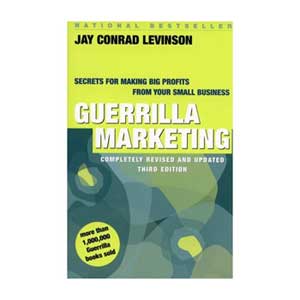
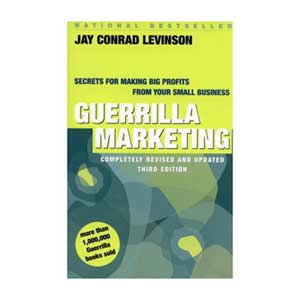 One of the books that I really found useful to guide your home or small business is Guerrilla Marketing. Not only this book gave a lot of inspirations, also that it can be easily used. This is what I got fro amazon.com.
Editorial Reviews
Review
The Los Angeles Times: "No matter what business you're in, Guerrilla Marketing, the bible of lively, low-cost marketing tips, is invaluable."
Review
"No matter what business you're in, Guerrilla Marketing, the bible of lively, low-cost marketing tips, is invaluable."
Book Description
When Guerrilla Marketing was first published in 1983, Jay Levinson revolutionalized marketing strategies for the small-business owner with his take-no-prisoners approach to finding clients. Filled with hundreds of solid ideas that really work, Levinson's philosophy has given birth to a new way of learning about market share and how to gain it.
In this completely revised and expanded third edition, Levinson offers a new arsenal of weaponry for small-business success in the next century. Filled with strategies for marketing on the Internet (explaining when and precisely how to use it), tips for putting other new technologies to work, programs for targeting prospects and cultivating repeat and referral business, and management lessons in the age of telecommuting and freelance employees, this book will be the entrepreneur's marketing bible in the twenty-first century.
About the Author
Jay Conrad Levinson, president of Guerrilla Marketing International, lecturers around the world on guerrilla business techniques for majors companies, professional organizations, and universities. He is the author or coauthor of eleven books in the Guerrilla Marketing series and write the popular "'Guerrilla Entrepreneur"' column for Entrepreneur magazine. The author currently lives in California.
 The wrong name can slow your success. Create the perfect name for your biz with these six steps. Naming your business can be a difficult task no matter how creative you are. Burt Alper, co-founder of www.catchwordbranding.com, a marketing company in Oakland, California, that specializes in branding, has been an expert in naming products and companies for almost a decade. Here are six steps Alper believes every entrepreneur should follow when choosing a business name:
Step 1: Identify who has a vote. Everybody involved in your startup has an opinion and will want to participate in the naming process. Leave the decision in the hands of those who know the business best.
Step 2: Know yourself. Understand the essence of your company. Find a hookùsomething that's compelling about who you areùand build on that from a vocabulary perspective.
Step 3: Know your competition. Understand what other people are doing, and dare to be different. You don't have to jump into the middle of the pack and use the same language or style as that of your competitors.
Step 4: Be creative. Don't come up with just two or three names. Push the envelope, and try to expand beyond the obvious by not getting stuck in generic naming solutions.
Step 5: Do your homework. Before you form an emotional bond with any name, find out if it is legally available for use; and make sure it won't translate oddly or offensively in another language.
Step 6: Select a name. It's an obvious step but often the most difficult to make. If you're waiting for an epiphany, a moment where you say, "This is the one," you could be waiting forever. Set a deadline, and just choose a name.
Alper says the latest naming trend is choosing a name that pins your company to a certain geography or to the founder's last name. Entrepreneurs will also find success this year by staying away from fanciful names and naming their product or company for exactly what it is. Customers value honesty and directness, and want to be reassured you're not trying to deceive them.By Sarah Pierce
 Many people I know say "I would love to work from home!" They want no commute, a relaxing work environment, the ability to work in your PJs. In fact I am actually in my PJs as I sit here and type this. :) However, you have to come down from the clouds and really, honestly evaluate your personality and how well you would do in this environment.
You will Be Alone
As much as you might dislike one or two people at your office, it is VERY hard to be all alone, every day, in a room in your house. Nobody to chat with, nobody to bounce ideas off of. Yes, you can build up your networking but it takes a lot of time. Some people might thrive on that isolation, but others will not be able to take it. Really think about times that you had to spend long stretches of time on your own. Did it make you happy, or was it something you had to 'tolerate'? You truly must be happy being on your own for this to work.
Your House will Surround You
For some people this isn't a problem. I personally don't mind at all walking through a messy house to get to my computer. But I know many people who easily get distracted - who start to watch TV, or run the laundry, or do other things. The more that you are drawn away from your task, the less work you will get done - and the less success you will find. I know many people who tried a home office and then had to rent a "real" office space because it was the only way they could make it work. If you are addicted to the TV, or focussed on a clean house, this might not work for you.
You MUST be a self starter
If you are the type that tends to surf the web when the boss isn't looking, you are going to be in serious trouble when you work from home. There won't be anyone to tell you to work - so the temptations will be overwhelming. If you play games or go web surfing, you aren't going to be working. It is your own life that will be getting ruined - but for some people that's just not enough motivation. Some people truly need a boss and guidance, as much as they hate to admit it. Think of the projects in your life. Do they tend to get done on time, or do they tend to drag on and on, never being completed? If you are a go-getter that finishes what you start, then working at home is for you. Otherwise, you really need to develop those skills first.
It Doesn't Come Quickly
Remember, 9 out of 10 business attempts fail, and success builds up slowly. You won't get millions of dollars the first day - or the first month. No matter what you attempt, you have to build up your product, build up advertising and name recognition, build up your network of contacts. Even if you have a head start, it is still going to take time to get everything rolling. You'll need a nest egg to carry you through a few months, and a backup plan if this doesn't work. You must be patient - and you must be tough enough to survive the grumpy people around you who tell you it won't work. You need to put your head down and focus for weeks, if not months, to get this launched. The people who pour in the time and energy to build up huge networks of contacts are the ones who succeed brilliantly.
Network, Network, Network
It's a cliche, but it really is amazing how well you can do in business if you get out and network. Join your local chamber of commerce. Join the small business associations in your area. Join magazines and groups dedicated to your topic area. The more people you know, the more they can give you advice and refer people to you. This is one of the keys to success and it takes a LOT of work - but it is incredibly worth it.
www.lisashea.com
 Your equipment is ready. You've got the computer, fax, and everything that you think is sufficient to start your own home busines. But you haven't got the idea of what your home business will be.
Well, the great thing about home business is you can get to do what you really like. Of course, there's other things to consider. But, basically, it will depend on what you want, how you define to be interesting. At least you will have fun in doing your home business. And that will save you from boredom.
Dan Ramsey in his book "101 Best Home Businesses" has a chapter on how to find YOUR best home business. He suggests these 10 steps:
1. List 5 things you do best2. List how others would benefit from what you do best3. Find out how to give people what they want4. Learn the value of your services to others5. Find out who else offers similar services6. Learn from the successes of others7. Learn from the failures of others8. Plan your own success9. Make low cost mistakes10. Enjoy what you do and how you do it
He then made suggestions on the best home businesses according to type. Here are a few of them:
Best Businesses Using Craft or Physical Skills- antique restoration- auto detail service- carpet cleaning business- errand/delivery service- housecleaning business
Best Service Businesses - bed and breakfast operator- caregiver- catering service- senior day care center- tutoring service
Best Professional Businesses- desktop publisher- magazine writer- import/export service- income tax preparation service- event planner
So, what are you waiting for? Get a pen and start figuring out which home business fits you best...!
 The federal court of appeals judge I clerked for had a phrase he would often quote to his clerks.
¨The first rule of warfare,¨ he would say, ¨is ´Define the Objective´.¨
What´s your objective? What goal are you trying to reach?
There´s no one answer. You might want to take your home based business, and grow it into a major public company - as Michael Dell did with his dorm-room based Dell Computer and the folks at Hewlett Packard did with their garage-based technical instruments company.
You might want to enjoy being at home, with your family, as much as possible - while generating some revenue and building value in the business.
You might want to create something substantial enough, working part-time at home, to enable you one day soon to leave the corporate world and answer to no one but yourself.
All worthy aims - and all requiring different plans and approaches.
If you don´t yet have a defined goal, set one. It may help if you set one for one year out, or three years out, so that the goal is more nearly immediate and real.
Once you have this goal, write it down. Reflect on it, and begin thinking about how you can achieve it. It can become the starting point for a more detailed business plan, but it certainly should become a touchstone against which you test every major decision in your business.
If your goal is to be with your family, there are customers and accounts that will be well worth turning down - the money they generate won´t outweigh the downside if they take you away from your family more than you want.
If your goal is to be a public company, you should start networking right away with experienced people who can give you seasoned guidance. Michael Dell lined up a blue chip advisory board when his company was still in its infancy, and those links helped him build toward being a far larger company.
If your goal is to build a business that replaces your current day job, you should test constantly whether what you are building can grow large enough to support your financial needs.
By defining your goal, and testing decisions against it, you can keep focus both in your business and your life.
So here´s the takeaway point. Define your objective. It´s not only the first rule of warfare, it´s the first rule of home business.
 Little three year-old Austin walked around the corner to his garage. Inside, the walls turned purple and 320 pairs of little black eyes were looking down at him. "Wow, Daddy! That's a lot of Barneys," he exclaimed. His Dad ran over and gave him a big hug. For Mike Enos, storing hundreds of stuffed dinosaurs in his garage is just part of being an eBay Power Seller. Mike left a corporate career behind to follow millions of other Americans who are starting home businesses.
Morning rush hour, useless water cooler chatter and harried goodbyes to family members are a thing of the past. Now Mike starts his day preparing oatmeal for his children and doing what he loves in the comfort of his own home. However, it's not all fun and games.
Like Mike, we ran our business out of the basement for eight years. Just because you're home-based, it doesn't mean you can don the fuzzy slippers, blast your favorite CD, or watch the soaps all day. "People think you can have a home business and twiddle your thumbs," states Enos. "It's not like that. You're very, very busy. A home-based business is a business, and you've got to treat it like one."
In fact, if a home-based business is your way of putting food on the table, you've got to be more disciplined than ever. Here are some tried and true tips that can help you.
Create a space
To facilitate focus, set aside a dedicated workspace. Let's call it your own "personal productivity sanctuary." Make sure all the tools and resources you need are right at your fingertips. You home business will benefit if you try to locate your workspace in a room with a door so you can avoid natural distractions like your refrigerator, your adorable infant or the boob tube. And the door helps when it comes to "man's best friend." Without it, you may learn what we did long ago - Fido's very good at doubling as a voracious paper shredder!
Dress for success
It might not be obvious, but one of the easiest ways to get into the business mindset is to "suit up." We've noticed that if you ditch the bathrobe or tattered t-shirt in exchange for business-casual attire, it puts you into the right mindset. It's a subtlety, but "dressing for success" can actually help you maintain your business edge.
Try technology
The supreme equalizer between traditional office-based businesses and home-based businesses is technology. Cell phones follow you everywhere, software organizes your finances, your email campaign gets the word out and a website hangs your shingle 24 hours a day. Don't be shy about tapping into the innumerable technology resources available for greater efficiency, connectivity, management, outsourcing, marketing and more.
Get out
If you spend hours each day glued to your computer screen, isolated from the world beyond your front door, beware! When starting home businesses, it's easy to become a hermit, so make a concerted effort to take meetings at the coffee shop and do things with your friends and family to help refresh your mind and entrepreneurial spirit. Many times, creative breakthroughs for your business come from interaction with people and exposure to what's happening "on the street."
If that clogged commute has got you down and you want to make a lifestyle change, consider starting a business from home. As we've confirmed in starting a business from our basement, applying these simple tips can position you for success, and before you know it, home will not only be where the heart is, but where the business is too!By The Sloan brothers - StartupNation
Are you still in the "should I do it" stage of launching a new business?Take a look at this list of pros and cons of starting a business.
If you are not truly excited by some of the pros, you may find that the sacrifices are not worth it.
On the cons, be sure to factor in some of these gritty realities of having your own business. It is not all wine and roses, and you want to factor in some of the inevitable negatives before you jump off the precipice.
But if the pros excite you and the fully-understood negatives don't scare you, what's keeping you?
Pros of Starting a Business: - If it works, you can make more money than you are making now - a lot more money. - You get to personally make the decisions that determine success or failure. - If you are right, you get to show it. - Only the marketplace can fire you. No need to worry about office politics. - You get to be creative - if you have a great idea, you can put it into practice. - No more being pigeonholed - you get to learn about and participate in each and every aspect of a business. - You get direct contact with your customers and potential customers. - You help build the local economy, by creating new jobs and new demand. - It just feels good, and creates a sense of personal satisfaction. - You can become an important player in your local community. - You can create something to pass on to your children, or something to sell to fund your retirement.Cons of Starting a Business: - You will have to work like a dog. - You have to be involved in all aspects of your business - right down to whether the toilets are clean - even if you can best leverage your skills by focusing on your area of expertise. - Starting out, you probably will have less income than you are used to. Long term, income can be unpredictable and unreliable. - You may have to take a big financial risk - investing your savings or incurring personal debt to get the business launched. - There's absolutely, positively no guarantee that you will succeed. - Success depends on your becoming competent in a wide range of disciplines, ranging from accounting to marketing to customer service. - Support services you may take for granted at your current job - from someone setting up your computer to arranging travel to seeing that your social security taxes are filed on time - now become your exclusive, time-consuming responsibility. - When you have a great idea, you will have less resources to draw on in making it happen - and more external obstacles to prevent it from happening - than if you were able to draw on the resources of an established business. - If you currently have a high-status job, don't expect people to be as impressed with your position as the owner of a small, unproven business. If the psychic income of impressing people is important to you, prepare yourself to live without it until after your business becomes a hot success.